
Wax vs. Sealant vs. Ceramic Coating: Which Is Right?
Paint protection for your vehicle is like sun protection for your skin. You wouldn't directly expose your skin to the harmful UV rays of the sun, and neither should you expose your vehicle's paint. Your vehicle's clear coat offers protection, but not permanently. What additional protection you choose is like choosing how to protect your skin from the sun.
Paint Protection Film (PPF) is like a hat and sun shirt - it forms a solid physical layer that completely blocks outside elements. You set it and forget it for as long as the material holds up (typically 2-10 years), and that depends on the quality, which equates to cost. High-quality, professionally installed PPF, like a nice hat and sun shirt, will last season after season.
Car waxes, car paint sealants, and ceramic coatings are like sunscreen - a liquid chemical barrier to the surface on which they are applied. You choose the type and protection based on your needs. While all require regular maintenance, waxes, paint sealants, and ceramic coatings each have their own durability and appearance:
- Carnauba wax lasts 1 to 3 months and adds a soft, warm, organic gloss like the paint is wet
- Paint sealants last 4 to 6 months and add a sharp, bright, and highly reflective mirror-like shine
- Ceramic coatings last 6 months to 2+ years and add a deep, intense, ultra-glossy finish that is described as a "candy-shell" effect
Car Wax Appearance
Whereas auto paint sealant reflects light off the surface, carnauba fills in microscopic paint imperfections, softening harsh reflections. Those curvaceous lines on cars from the 1930s through the 1950s are accentuated with wax because it bends and softens light reflections, making the paint look wet. And darker paints with metallic flakes react to carnauba wax like a magnifying glass, turning a flat paint job into a three-dimensional galaxy of color.
Car Wax Durability
Waxes are organic substances with limited durability from due to their natural vulnerabilities. Waxes don't fuse to the car's paint, allowing them to be more easily removed from the surface. Waxes have a melting point close to the temperature a dark-colored car can reach sitting in direct summer sunlight, causing them to soften and accelerate removal. Waxes have low chemical resistance, making them more soluble in strong detergents and automated car soaps. Synthetic waxes replace these organic substances to stretch these limitations without becoming a paint sealant or ceramic coating.
Ivan’s Best Car Waxes

Ivan Says
All-in-one cleaner waxes are excellent to incorporate occasionally into a regular waxing maintenance routine. Cleaner waxes are formulated with "micro-abrasive cleaners" and gentle polishing agents to remove light oxidation, minor blemishes, and fine swirl marks. They can be applied by hand or with a polisher.
Car Paint Sealant Appearance
mirror-like shine
Because the synthetic polymers cure into a perfectly flat, uniform layer, light bounces off the car in straight lines. These characteristics accentuate the wedge-era design of the time, known for straight lines, sharp corners, and geometric shapes. Synthetic polymer sealants are the ultimate visual amplifier for chiseled, boxy cars because they act like a sheet of highly polished glass laid over flat metal.
Car Paint Sealant Durability
Unlike natural car wax, which sits on top of the paint as a soft crust, sealants are engineered to behave like a microscopic shield. Why? Car paint sealants undergo a chemical reaction called cross-linking when curing, creating an molecular knit that is closer to the surface with more complete coverage. This, along with engineered resins with higher chemical resistance, more extreme hydrophobicity, and heat tolerances from 300°F to 400°F, ensures paint sealants remain structurally solid in more conditions for longer.
Ivan’s Best Paint Sealants
Ivan Says
Car paint sealants require a perfectly clean surface to fully bond to the paint. A thorough wash, followed by a paint cleaner or paint sealant prep spray, is crucial. Never apply a sealant over a wax or ceramic coating. You can “stack” or apply multiple layers of paint sealants. Ensure the first layer fully cures (usually 12 to 24 hours, depending on the product) before applying the second.
Ceramic Coating Appearance
"candy-like" shine
Ceramic coatings provide an aesthetic all to themselves. The “candy-like” description comes from three unique characteristics of ceramic coatings. First, the nano-particles fill every single microscopic valley in the clear coat, creating an optically perfect topcoat that allows light to hit the paint pigment and bounce straight back to your eyes, which dramatically deepens the color. Second, ceramic coating builds a much thicker physical barrier of quartz glass that traps light inside it for a split second before reflecting it back out, creating a 3D illusion of depth. Third, like sealants, light hits a cured ceramic glass shell and bounces off an incredibly flat surface, creating an artificial sharpness with hard, high-contrast edges.
Ceramic Coating Durability
The wide range boils down to the concentration of active solids. Spray ceramic coatings last anywhere from 6 to 12 months. They contain a very low concentration of active silicon dioxide in exchange for ease of application, resulting in a microscopic layer that wears off over time from friction and weather. By comparison, professional-grade coatings last from 2 to 10+ years. They contain an extremely high concentration of active solids that leave behind a thick, measurable layer of glass that can only be removed by compounding and heavy machine polishing.
Ivan’s Best Ceramic Coatings
Ivan Says
Spray ceramic coatings are incredibly easy to use. If you miss a spot or make a mistake, you just wipe it down with a microfiber towel. Once applied using a small applicator block, professional-grade coatings "flash" (sweat and turn oily) within 30 to 90 seconds. You must level and buff it off immediately. If you miss a spot, it hardens into a permanent, cloudy streak called a high spot that can only be fixed by sanding or machine-polishing the paint.
Wax vs. Sealant vs. Ceramic Coating: Side-by-Side Comparison
| Carnauba Wax | Car Paint Sealant | Ceramic Coating | |
|---|---|---|---|
| Typical Durability | 1 to 3 months | 4 to 6 months | 6 months to 2+ years |
| Ease of Application | Easy; both conventional and cleaner waxes are straightforward | Moderate; a clean surface and proper curing are crucial for optimal protection | Varies; sprays are simple while professional coatings are most technical |
| Visual Enhancement | Soft, warm, organic gloss for a wet look | Sharp, bright, highly reflective for a mirror-like shine | Deep, intense, ultra-glossy for a candy-like finish |
| Environmental Durability | Low; strong detergents and automated car-wash soaps can remove it quickly | High; engineered polymers better tolerate detergents, heat, and environmental exposure | Moderate to Very High, depending on the concentration of active ceramic ingredients |
|
Estimate Cost Range *Always check manufacturer coverage claims |
$2-$6 per application | $1-$5 per application | $3-$5 per application (spray) $60-$126 per application (bottle) |
| Ideal Use Case | Show cars, weekend vehicles, and enthusiasts who enjoy ritual | Daily drivers that need dependable protection with less frequent reapplication | All vehicle types with regular upkeep to long-term protection from a professional coating |
General Rules of Thumb for All Paint Protection
A protection product can only bond to what it touches.
If you apply wax, a sealant, or a coating over a car that has road film, iron deposits, embedded dirt, or old wax, the product will bond to the dirt instead of the clear coat. It will wash off in a fraction of its advertised lifespan.
Never work on a hot surface or in direct sunlight.
Direct sunlight and hot sheet metal cause the carrier solvents in waxes, sealants, and coatings to evaporate instantly. This hardens the product before you can level or buff it out, creating permanent streaks, cloudy spots, and heavy residue. Always work in a shaded garage or early in the morning.
Less product is always more.
Your car’s paint can only absorb a microscopic amount of product into its pores. Any excess product you pile on is just wasted material that you will have to exhaust yourself buffing off. It can also cause product "gunking" and severe hazing.
Respect the curing window.
Waxes need roughly 1 hour to cure, synthetic sealants require 12 to 24 hours, and ceramic coatings need 24 hours to 7 days to fully harden. If the vehicle is exposed to rain, heavy morning dew, or a car wash during this critical period, the chemical processes fail, compromising the protection.
Use a pH-neutral dedicated automotive shampoo between reapplications.
Harsh cleaners, like dish soap (which you should never use), are highly alkaline degreasers engineered to strip oils and grease. They will instantly strip away natural carnauba waxes, severely degrade synthetic sealants, and prematurely wear down the top layer of ceramic coatings.
Ask Ivan - Paint Protection FAQs
The main difference between car wax, paint sealant, and ceramic coating is their chemical properties. Each provides different durability and visual enhancements based on its compounds and how it bonds to the surface. Waxes are natural and sit on top of the surface as an added layer of protection. The smaller synthetic compounds in paint sealants cross-link with the surface to offer stronger protection. Ceramic coatings offer the best protection from the smallest and strongest synthetic compounds that actually fuse into the surface.
The typical car wax lasts a few months, whereas sealants last many months to a full year and professional-grade ceramic coatings can last multiple years. Each provides roughly the same UV protection during its lifespan. Waxes and paint sealants can be removed with heavy-duty cleaners and surface prep products, whereas professional-grade ceramic coatings require mechanical polishing.
Ceramic coating is better than wax in terms of its durability to environmental conditions and scratch resistance. Professional-grade ceramic coatings have a lifespan of 2+ years and can withstand very light surface scratches. By comparison, waxes last a few months at most and provide no scratch resistance. The visual differences between ceramic coating and wax are more about personal preference.
You shouldn't apply wax over a ceramic coating. The extreme hydrophobic properties of ceramic coatings will prevent the natural compounds of wax from sticking. Use a ceramic spray or ceramic-infused detail spray to maintain or "top off" a ceramic coating in between full applications.
Every name-brand natural (carnauba), synthetic, or cleaner wax offers the same UV protection: blocking 50-70% of harmful sun rays. The choice is budget, whether you want an all-in-one cleaner wax to polish minor surface imperfections while protecting, or not; and you prefer application method - liquid for machine polishing or paste for hand polishing.
Summer heat breaks down the natural compounds of car wax. The melting point for most car waxes is around the temperature that the surface of a dark-painted car in direct summer sun can reach. Also, many automatic car washes use hot, pressurized water that softens the wax, making it easier to remove.
Spray-on ceramic coatings are the easiest to apply. They require a simple two-step spray-on and wipe-off application process. The tradeoff is durability: these ceramic coatings last months, whereas professional-grade ceramic coatings that require extensive surface prep and curing will last years.
Polishing a car before applying wax or a coating is only needed to remove surface imperfections that will still be visible after the protection is applied. Given that any protection, wax, paint sealant or ceramic coating, is only as good as the surface it is protecting, it is essential to completely remove prior protectant and prep the surface with a thorough wash and surface prep product.
Carnauba wax comes from the Brazilian carnauba palm tree, which has a natural UV-reflective substance that protects the plant, and is the oldest paint protection still available today, having been around for some 125 years. Car enthusiasts prefer it for the "wet paint" visual enhancement and application rituals required due to the limited durability.
Waxes need to be reapplied every few months, whereas paint sealants need to be reapplied once or twice per year depending on what environmental conditions the vehicle is exposed to. The best test is to run clean water over a portion of the paint surface immediately after application. Note the beading properties and recheck monthly. As the hydrophobic characteristics fade, wax or sealants begin to signal it's time to reapply.
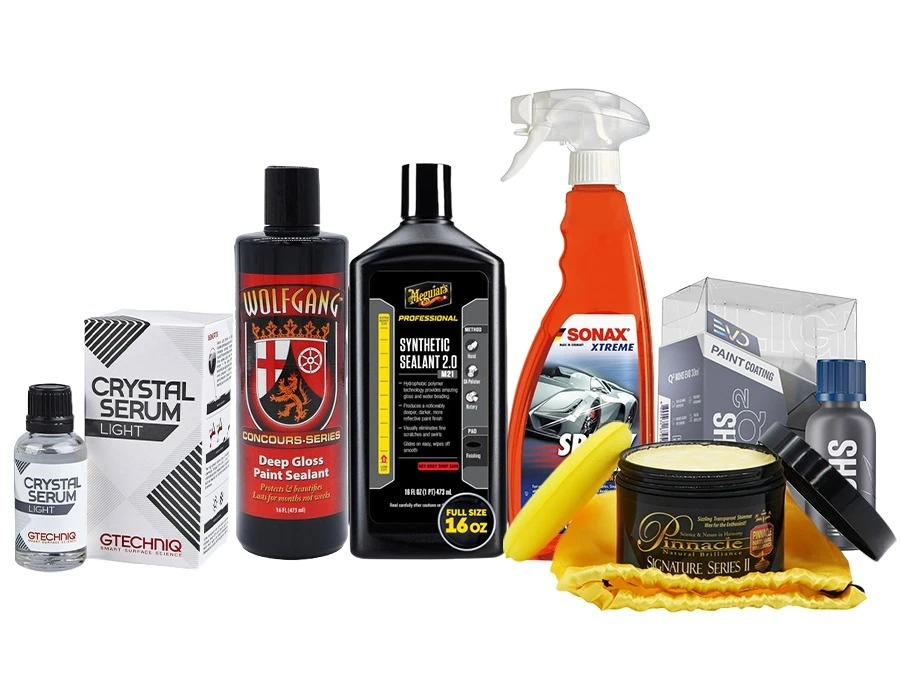
READY TO PROTECT YOUR PAINT?
Explore our top-rated waxes, sealants and ceramic coatings
SHOP PAINT PROTECTION