
Leather & Suede Care
If you or a client has invested in high-quality upholstery, you’ll need the right supplies to keep it looking and feeling great. Regular care using our leather car seat cleaner and suede cleaner products will make every ride feel luxurious. Leather that is left untreated will eventually dry, shrink and crack, sometimes irreversibly. Suede, meanwhile, is more likely to be damaged by everyday use or accidents. Autogeek.net has supplies from Mothers®, Pinnacle, 3D Car Care, Griot’s Garage and others to keep automotive upholstery soft and cozy.
Best Car Leather Cleaner Products
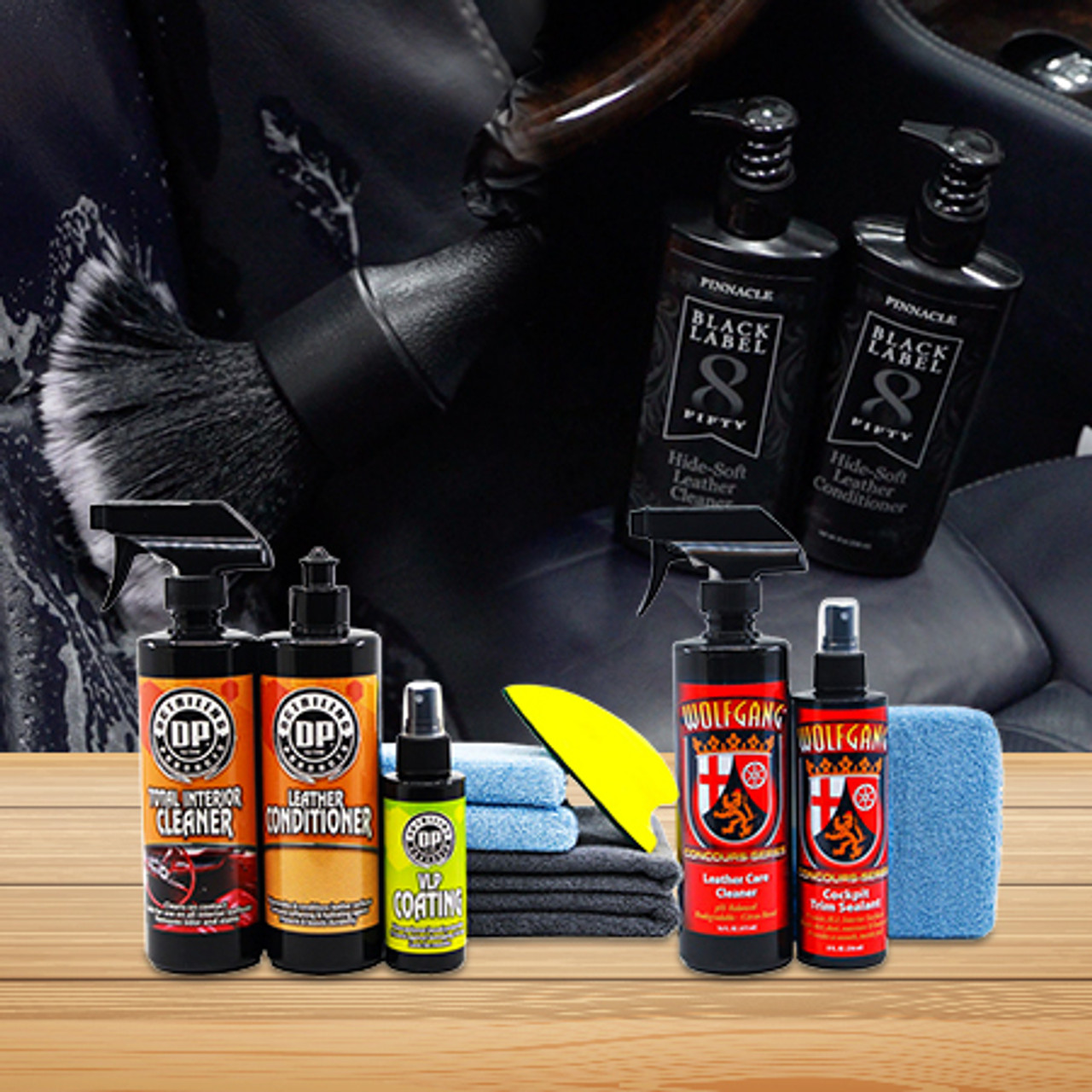
Use the convenient category filters to shop for every stage of leather care. Whether you need leather cleaners, car leather conditioner or a balm to seal in moisture, we have a professional-quality solution. The best products contain natural ingredients such as mink oil and lanolin; you’ll also want UV protectants to resist sun-fade. Automotive leather care kits contain these essential formulas along with applicator pads, microfiber tools and other accessories. Purchasing a kit will save you money on the supplies you needed anyway.
Suede Cleaners and Accessories
Anyone who has a suede or Alcantara fabric interior should browse our selection of suede cleaners and protectants. They’re made for heavy-duty cleaning power that won’t harm this sensitive material. Just like with our leather cleaners, suede care bundles are available for busy shops. These upholstery products also have non-automotive uses such as clothing and footwear. If you have questions about how any products work, visit the Geek Center or call to speak with an expert.